
California Wage and Hour Lawyer for Employees
As a California wage and hour lawyer, Milan Chatterjee helps employees in San Bernardino and Riverside Counties recover unpaid overtime, missed break pay, late final wages and taken tips. California's wage laws are among the strictest in the country, and employers that break them can owe wages, premiums, penalties and your attorney's fees.
Free, confidential. We respond within minutes.

2 States
Admitted to the State Bars of Nevada and California

Fortune 500
Former in-house counsel, Las Vegas Sands Corp.

UCLA Law
Law degree, UCLA School of Law; visiting student, NYU Law

As Seen In
Bloomberg Law and the Las Vegas Review-Journal
2 States
Admitted to the State Bars of Nevada and California
Fortune 500
Former in-house counsel, Las Vegas Sands Corp
UCLA Law
Law degree, UCLA School of Law; visiting student, NYU Law
As Seen In
Bloomberg Law and the Las Vegas Review-Journal
What You Can Recover in a California Wage Claim
California wage claims are about more than the wages themselves. The Labor Code adds premiums, penalties, interest and fees that can multiply what an employer owes. As your California wage and hour lawyer, our job is to find every amount that applies.

Wages and premiums
- Unpaid minimum wage and overtime, plus interest (Lab. Code 1194)
- Liquidated damages equal to unpaid minimum wages (Lab. Code 1194.2)
- One extra hour of pay for each missed meal or rest break (Lab. Code 226.7)
- Unpaid paid sick leave, and tips that were taken (Lab. Code 351)
- Reimbursement of work expenses, with interest (Lab. Code 2802)
- Attorney's fees and costs paid by the employer (Lab. Code 1194, 2802)

Penalties
- Waiting time penalties of up to 30 days of wages for late final pay (Lab. Code 203)
- Wage statement penalties of $50 for the first pay period and $100 for each later one, up to $4,000 (Lab. Code 226)
- A $750 penalty if your employer ignores a written request for your personnel file (Lab. Code 1198.5)
- Protection against retaliation for complaining about pay (Lab. Code 98.6)

Employers Cannot Legally Avoid Paying Employees
California and federal laws protect employees from wage theft and unfair compensation practices. If your employer violated wage and hour laws, you may be entitled to recover unpaid wages, overtime compensation, penalties, and attorney fees. Call (888) 785-9923 for immediate assistance.
California Wage Laws Employers Break Most Often
California protects pay in ways federal law and Nevada law do not. These are the violations a California wage and hour lawyer sees most often in the Inland Empire.
Unpaid Overtime and Double Time
Nonexempt employees earn time and a half after 8 hours in a workday, after 40 hours in a workweek, and for the first 8 hours on the seventh consecutive day. Double time applies after 12 hours in a day and after 8 hours on the seventh day (Lab. Code 510).
How We Win: We rebuild your hours from timecards, schedules, badge or app logins and messages, then compare them with what your pay stubs show. Daily overtime is often missed even when weekly totals look right.
Missed Meal and Rest Breaks
You are entitled to a 30-minute meal break before the end of your fifth hour of work and a second before the end of the tenth, plus a paid 10-minute rest break for every 4 hours or major fraction. For each day a meal or rest break is missed, your employer owes one extra hour of pay (Lab. Code 512, 226.7).
The Records Tell the Story: Short, late or interrupted meal periods show up in timecard punches. Being kept on call or unable to leave your station during a break can also count as a missed break.
Minimum Wage, Off-the-Clock Work and Taken Tips
Nevada employers must comply with state laws regarding final paychecks and earned compensation.
Violations May Include
Misclassification as Exempt or as a Contractor
Being called a manager, paid a salary or given a 1099 does not by itself remove your right to overtime and breaks. Common misclassification problems include:
- Salary too low: most exempt employees must earn at least $70,304 a year in 2026 (Lab. Code 515)
- Duties test not met: a title without real managerial or professional duties
- Independent contractor label: California presumes you are an employee unless the business passes the ABC test
- Unpaid expenses: contractors who are really employees are owed reimbursement for work costs (Lab. Code 2802)
What We Look For:How much control the business had over your work, whether your work was part of its usual business, and whether you ran a business of your own.
Not Sure You Are Being Paid Correctly?
Bring a few pay stubs and your schedule. We will tell you plainly whether your pay follows California law and what you may be owed.
Investigation, Aggressive Pursuit, Maximum Recovery
When you hire a California wage and hour lawyer at our firm, your claim moves through three phases.
We request your payroll records, which your employer must provide within 21 days (Lab. Code 226), and your personnel file, due within 30 days of a written request (Lab. Code 1198.5). We compare your hours with your pay and calculate what you are owed, including premiums and penalties.
We choose the right forum: a wage claim with the California Labor Commissioner, which moves through a settlement conference and a hearing, or a lawsuit in Superior Court. As former in-house counsel, Milan knows how payroll and timekeeping systems are set up and where they go wrong.
We pursue every wage, premium, penalty and fee the law allows, and we make sure any settlement accounts for the full lookback period. If you were also retaliated against for complaining, we pursue that claim too.
California Workers We Fight For
Our California wage and hour lawyer represents employees across the Inland Empire's largest industries.

Warehousing & Logistics
Long shifts, mandatory overtime, pre-shift security screening and short breaks make overtime and break claims common in distribution centers.

Health Care
Nurses and staff working 12-hour shifts, missed breaks and on-call time, plus the health care minimum wage for covered facilities.

Restaurants & Fast Food
Tip theft, off-the-clock side work, missed breaks and the $20.00 fast food minimum wage for covered restaurants.

Retail & Hospitality
Off-the-clock closing tasks, bag checks, split shifts and late final paychecks.

Construction & Trades
Daily overtime, unpaid travel between job sites, and workers labeled independent contractors.

Office & Professional
Salaried assistant managers and coordinators misclassified as exempt, and unreimbursed phone, mileage and home office costs.
What To Do If Your Employer Owes You Wages
Most wage claims in California can reach back 3 years, but every pay period that passes is one more that can fall outside the deadline. Start now, even if you still work there.
Keep Your Own Record of Hours
Write down when you start, stop, take breaks and leave each day, including work before clock-in or after clock-out. Your own notes can be strong evidence when the employer's records are incomplete.
Save Pay Stubs and Schedules
Keep every pay stub, schedule, text about shifts and photo of posted schedules. Do not take confidential company files.
Request Your Payroll Records
You have the right to inspect or receive copies of your payroll records, and your employer must comply within 21 calendar days of your request (Lab. Code 226).
Call an Employee Rights Lawyer
Complaining about pay is protected, and retaliation is illegal. Call (888) 785-9923 for a free consultation about your options.
Waiting too long to file a wage claim may reduce your ability to recover unpaid compensation. Call (888) 785-9923 - we offer emergency consultations for employees facing imminent agency deadlines.
Evidence That Can Strengthen a Wage Claim
The strongest California wage claims are built on the employer's own records: timecards, schedules, pay stubs and payroll data. Gaps between the hours you worked and the hours you were paid, meal punches under 30 minutes, and pay stubs missing required information all point to violations.
Your own notes, texts asking you to work through breaks or after clocking out, app or badge logins, and coworkers who worked the same shifts fill in what the records leave out. A California wage and hour lawyer organizes this evidence into a clear calculation for the Labor Commissioner, a mediator or a court.
Wage and Hour Claims and California Employment Law
How far back you can recover depends on the type of claim. Talk to an attorney before relying on any deadline.
| Claim | Where to file | General deadline | Source |
|---|---|---|---|
| Minimum wage, overtime, meal and rest break premiums, sick leave, illegal deductions, reimbursements | Labor Commissioner or court | 3 years | California Labor Commissioner |
| Wages promised in a written contract | Labor Commissioner or court | 4 years | California Labor Commissioner |
| Oral promise to pay more than minimum wage | Labor Commissioner or court | 2 years | California Labor Commissioner |
| Penalty for refusing access to payroll or personnel records | Labor Commissioner or court | 1 year | California Labor Commissioner |
| Retaliation for complaining about pay | Labor Commissioner | 1 year | Lab. Code 98.7 |
| Equal pay | Labor Commissioner or court | 3 years | Lab. Code 1197.5 |
Frequently Asked Questions About California Wage and Hour Law
Yes, if you are a nonexempt employee. California requires time and a half after 8 hours in a workday, after 40 hours in a workweek, and for the first 8 hours on the seventh consecutive day of work, and double time after 12 hours in a day or after 8 hours on the seventh day (Lab. Code 510).
Your employer owes you one additional hour of pay at your regular rate for each workday a meal break is missed, and another for each workday a rest break is missed (Lab. Code 226.7). The meal break must start before the end of your fifth hour of work, and you are owed a paid 10-minute rest break for every 4 hours or major fraction.
California's statewide minimum wage is $16.90 an hour in 2026. Many fast food workers must be paid at least $20.00 an hour, covered health care workers have higher rates by facility type, and some cities set a higher local minimum. The state has announced $17.40 an hour starting January 1, 2027.
Generally 3 years for unpaid minimum wage, overtime, meal and rest break premiums, sick leave, illegal deductions and unpaid reimbursements. Claims for wages promised in a written contract can go back 4 years, and claims based on an oral promise to pay more than minimum wage go back 2 years.
Yes. A salary alone does not make you exempt. In 2026, most exempt employees must earn at least $70,304 a year and mainly perform exempt duties. If either requirement is not met, you may be owed overtime and break premiums.
Immediately if you are fired, on your last day if you quit with at least 72 hours' notice, and within 72 hours if you quit without notice (Lab. Code 201, 202). A willful delay can cost the employer up to 30 days of your wages as a waiting time penalty (Lab. Code 203).
No. California law prohibits retaliation for complaining about unpaid wages, and adverse action within 90 days of certain protected complaints is presumed to be retaliatory (Lab. Code 98.6). A retaliation complaint with the Labor Commissioner generally must be filed within 1 year.
Yes. We represent employees throughout San Bernardino and Riverside Counties in California wage and hour claims, with free, confidential consultations in English or Spanish. Call (888) 785-9923.
Owed Wages? Talk to a California Wage and Hour Lawyer.
Tell us how you are paid and what hours you work. The consultation is free and confidential.
Related Employees Services
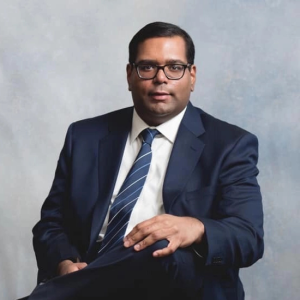
Milan Chatterjee
UCLA Law Graduate. Former in-house counsel at Las Vegas Sands Corp. Nevada & California Bar. Founding President, South Asian Bar Assoc. of Las Vegas.