
Hazard Pay, Health, and Safety Rights for Nevada Casino and Hotel Staff

By Milan Chatterjee | Founding Attorney, Milan Legal

Casino and hotel worker safety rights in Nevada extend beyond protective equipment and accident reporting. Employees working in casinos, resorts, restaurants, housekeeping, kitchens, maintenance, and hotel security may face hazards such as chemical exposure, excessive heat, slippery floors, heavy lifting, infectious illnesses, and workplace violence. Understanding Nevada’s workplace safety laws can help employees recognize unsafe conditions and determine when an employer may be required to take corrective action. For more information about employment rights in the hospitality industry, visit our Casino & Hospitality Worker Rights Attorney page.
One important distinction is that hazard pay and workplace safety protections are not the same thing. Nevada law does not generally require every private casino or hotel employer to pay an additional premium simply because a job involves risk. However, employers must comply with applicable safety requirements, and certain employment contracts, collective bargaining agreements, or employer policies may provide additional compensation for hazardous assignments. Employees should understand their workplace safety rights and when they may be entitled to additional pay.
Does Nevada Require Hazard Pay for Casino and Hotel Workers?
Hazard pay is additional compensation provided for work involving unusual risks, difficult conditions, or specific dangerous assignments. Some employers offer it voluntarily, while others provide it through employment agreements, union contracts, written compensation policies, or negotiated arrangements. The terms of those arrangements determine when the additional payment is due and how it is calculated.
For most private-sector casino and hotel employees, there is no general Nevada law requiring a separate hazard-pay premium for every dangerous task. An employee who handles cleaning chemicals, works near commercial kitchen equipment, or performs maintenance at height does not automatically qualify for extra compensation solely because the work carries risk. However, the absence of mandatory hazard pay does not give an employer permission to ignore workplace safety requirements.
Nevada does have specific additional-compensation rules for certain state employees performing defined dangerous duties. Those rules should not be confused with a general hazard-pay entitlement for private hospitality workers. Employees should review their contracts, employee handbooks, applicable collective bargaining agreements, and compensation policies to determine whether a promised premium applies to their position.
Get Guidance About Unsafe Casino or Hotel Working Conditions
Workplace Safety Rights Under Nevada OSHA
Nevada’s occupational safety and health framework requires covered employers to provide employment and workplaces free from recognized hazards that cause or are likely to cause death or serious physical harm. Employers must also comply with applicable safety standards governing equipment, chemicals, protective measures, training, and other workplace conditions. The specific obligations depend on the hazard, the work being performed, and the regulations that apply.
For casino and hotel employees, these protections may be relevant when housekeeping staff encounter unsafe chemical exposure, kitchen workers operate inadequately guarded machinery, maintenance employees face fall hazards, or staff repeatedly work in areas with dangerous electrical or structural conditions. Employers should assess recognized risks and take appropriate steps to prevent injuries rather than relying on employees to manage hazards without adequate training or equipment.
Workers also have the right to raise safety concerns and seek assistance through the appropriate occupational safety agency. Employees can report unsafe conditions and request an inspection when warranted. A complaint does not guarantee that every reported condition will result in a citation, but it can trigger review by the relevant authority. Nevada OSHA provides worker resources for reporting workplace hazards and learning about protections against retaliation.
Common Health and Safety Risks in Casinos and Hotels
Housekeeping employees may face repetitive lifting, awkward movements, exposure to cleaning chemicals, and slip hazards while cleaning bathrooms or handling wet linens. Employers should evaluate these risks and provide appropriate procedures, equipment, and training. If a worker repeatedly reports a defective cart, unsafe chemical-storage practice, or an unaddressed hazard in guest rooms, the employer should not simply expect the employee to work around the problem indefinitely.
Kitchen and restaurant workers may encounter hot surfaces, steam, sharp equipment, slippery floors, and machinery that can cause serious injuries. Appropriate guarding, maintenance, training, and safe operating procedures can reduce these risks. Employees should report malfunctioning equipment and avoid bypassing safeguards to meet service demands.
Security personnel and other guest-facing employees may encounter threats, assaults, or escalating confrontations. The appropriate response depends on the situation and the employee’s duties, but employers should consider foreseeable risks and establish suitable procedures, training, communication systems, and emergency responses. A workplace safety concern may arise when management repeatedly disregards credible threats or requires staff to handle dangerous incidents without appropriate preparation.
Maintenance teams, pool staff, and outdoor workers may face electrical hazards, falls, machinery risks, and extreme temperatures. These employees may need specialized training or protective equipment for particular tasks. The fact that a worker has performed a job for years does not remove an employer’s obligation to comply with applicable safety standards.
Heat Safety Rights for Nevada Hospitality Employees
Heat exposure is an important concern in Nevada, particularly for employees working outdoors, in hot kitchens, near equipment that produces heat, or in other environments where temperatures may become dangerous. Heat-related illness can develop even when an employee is accustomed to the job. Warning signs can include dizziness, headache, nausea, weakness, heavy sweating, confusion, and other symptoms requiring prompt attention.
Nevada adopted a heat-illness prevention regulation that became effective in 2024, with enforcement beginning in April 2025. The regulation includes specific requirements for certain employers with more than 10 employees when the applicable job hazard analysis identifies qualifying occupational heat exposure. Depending on the circumstances, required measures can include potable drinking water, appropriate rest breaks when symptoms occur, cooling methods, monitoring, and a written heat-illness prevention plan. These requirements are not identical for every employer or work assignment, so the regulation’s thresholds and exceptions matter.
Employees who regularly work in hot conditions should understand the applicable safety procedures, know how to report symptoms, and promptly notify the appropriate supervisor when conditions become dangerous. If a worker becomes ill, the immediate priority is medical attention and an appropriate emergency response. Reporting a heat hazard or asking for required protective measures should not lead to unlawful retaliation.
Document Safety Problems Before They Escalate
Can Your Employer Punish You for Reporting a Safety Hazard?
Employees may worry that raising a safety concern will lead to fewer shifts, undesirable assignments, disciplinary action, or termination. Federal and Nevada workplace protections prohibit certain forms of retaliation against employees who engage in protected safety-related activities. The precise protection depends on the applicable statute and the employee’s conduct.
Protected activities can include reporting unsafe conditions, raising safety concerns with management, cooperating with an inspection, or reporting a workplace injury or illness. Potentially adverse actions include termination, demotion, reduced hours, discipline, or other treatment that could discourage an employee from exercising protected rights. Evidence that an employer knew about the complaint and acted against the employee afterward may be relevant, although timing alone does not automatically establish unlawful retaliation.
Nevada Revised Statutes 618.445 addresses discrimination against employees for exercising specified occupational safety and health rights. A complaint alleging retaliation under that provision generally must be filed within 30 days after the alleged violation. Other whistleblower laws may apply to different conduct and may have different deadlines. Because these filing periods can be short, employees should not wait for an internal investigation to conclude before checking the applicable deadline.
What Should You Do If Your Employer Ignores a Dangerous Condition?
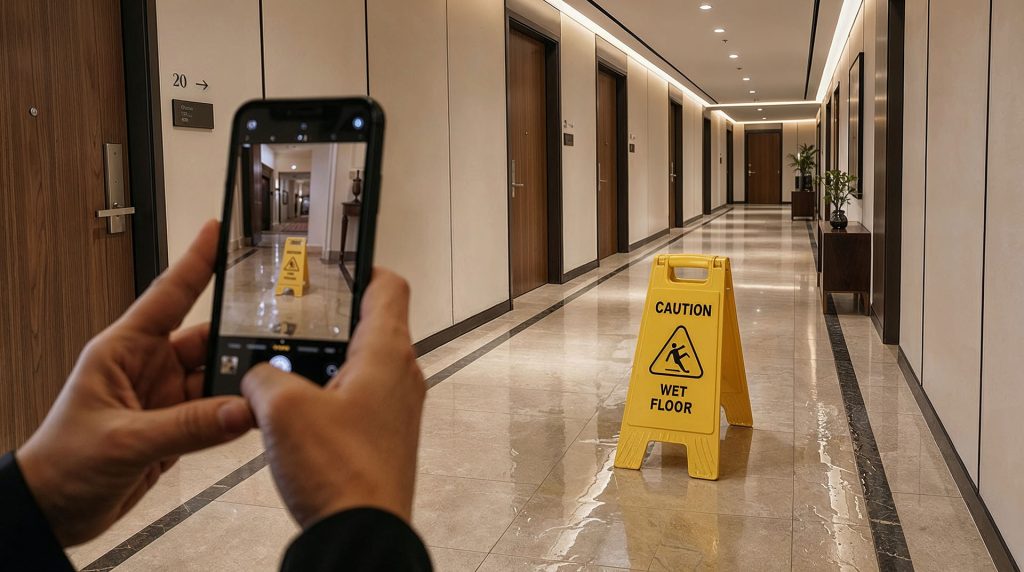
Start by identifying the hazard as specifically as possible. Record the date, location, nature of the danger, and any injuries, symptoms, near misses, or prior incidents. If appropriate, report the concern through the employer’s safety reporting process or to a supervisor, and retain a copy of the communication. Clear, factual reporting can help establish what management knew and whether the problem continued.
Preserve relevant photographs, messages, work orders, training records, incident reports, and witness information when you can lawfully access them. Do not remove confidential guest information or proprietary business records. If you experience a work-related injury or illness, seek appropriate medical care and follow the applicable reporting procedures. Keep copies of records concerning medical treatment, the incident, and communications with management.
When an internal report does not resolve a serious hazard, Nevada OSHA offers a process for reporting workplace safety concerns and requesting an inspection. Employees may also seek advice about retaliation or other employment-law issues. If there is an immediate threat to life or serious injury, prioritize getting to safety and contacting emergency services rather than waiting for an ordinary complaint process.
What If You Are Injured at Work?
An employee who suffers a workplace injury should seek prompt medical attention and report the incident according to the employer’s procedures. Nevada’s workers’ compensation system may provide benefits for qualifying work-related injuries or occupational illnesses, subject to applicable requirements. Workers should keep documentation of the incident, medical visits, work restrictions, missed time, and communications about the claim.
A safety violation and a workers’ compensation claim are related but distinct issues. An injury does not automatically prove that the employer violated a safety regulation, and a safety violation does not automatically establish eligibility for every form of compensation. Similarly, an employee who reports an injury or files a claim may have protections against certain retaliatory actions, depending on the facts and the applicable law.
If your employer pressures you not to report an injury, discourages medical treatment, or threatens your job after you raise a legitimate concern, document what happened and obtain advice promptly. Avoid assuming that an internal human resources complaint, workers’ compensation filing, and OSHA complaint all follow the same process or deadline.
About Milan Chatterjee
This article was prepared by Milan Chatterjee, a Nevada and California licensed attorney and founder of Best Employment Attorney, the dedicated employment law practice of Milan Legal.
Milan represents employees and employers throughout Las Vegas, Reno, and across Nevada in workplace disputes involving retaliation, whistleblower claims, wrongful termination, discrimination, wage and hour violations, severance agreements, employment contracts, and related employment matters.
He earned his Juris Doctor from UCLA School of Law and also studied at New York University School of Law as a visiting student. Before entering private practice, Milan served as Associate Compliance Counsel at Las Vegas Sands Corporation, where he advised on employment compliance, workplace investigations, corporate governance, internal policies, workforce restructurings, severance matters, and enterprise risk management.
Today, Milan combines that corporate legal experience with a focused employment law practice representing employees and employers throughout Nevada.
Frequently Asked Questions
Nevada does not generally require private casino and hotel employers to pay an additional premium for every hazardous assignment. Hazard pay may be required under an applicable contract, collective bargaining agreement, or employer policy, while workplace safety obligations apply separately.
Yes. Employees can report workplace hazards through appropriate employer channels or contact Nevada OSHA about potentially unsafe conditions. A worker may also request an inspection when appropriate.
Certain laws prohibit retaliation against employees who engage in protected safety-related activities. Whether a particular termination or disciplinary action is unlawful depends on the facts, the protected activity, and the applicable law.
Nevada has a heat-illness prevention regulation with specific requirements for qualifying employers and work conditions. Requirements depend on factors such as employer size, occupational heat exposure, and the results of the applicable hazard analysis.
Seek appropriate medical care, report the injury according to applicable procedures, and preserve relevant records. You may have options under Nevada’s workers’ compensation system, depending on the circumstances.
A retaliation complaint under Nevada Revised Statutes 618.445 generally must be filed within 30 days after the alleged violation. Other laws may have different deadlines, so employees should confirm the applicable deadline promptly.
Keep lawful copies of safety reports, relevant messages, photographs, incident records, training documents, and information about witnesses. Documenting when you raised the concern and how the employer responded may help clarify the situation.
Protect Your Rights in a Nevada Hospitality Workplace
Conclusion
Working in a Nevada casino or hotel can mean long shifts, hot kitchens, heavy carts, strong chemicals, and sometimes tense situations with guests. You shouldn’t have to ignore dangerous conditions just to keep your job. Hazard pay isn’t guaranteed for every risky task, but you do have real safety rights and you’re protected when you speak up about hazards, injuries, or unsafe practices. If your employer brushes off serious problems or punishes you for raising them, that’s when it makes sense to get legal advice and understand your options.

Free, confidential. We respond within minutes.